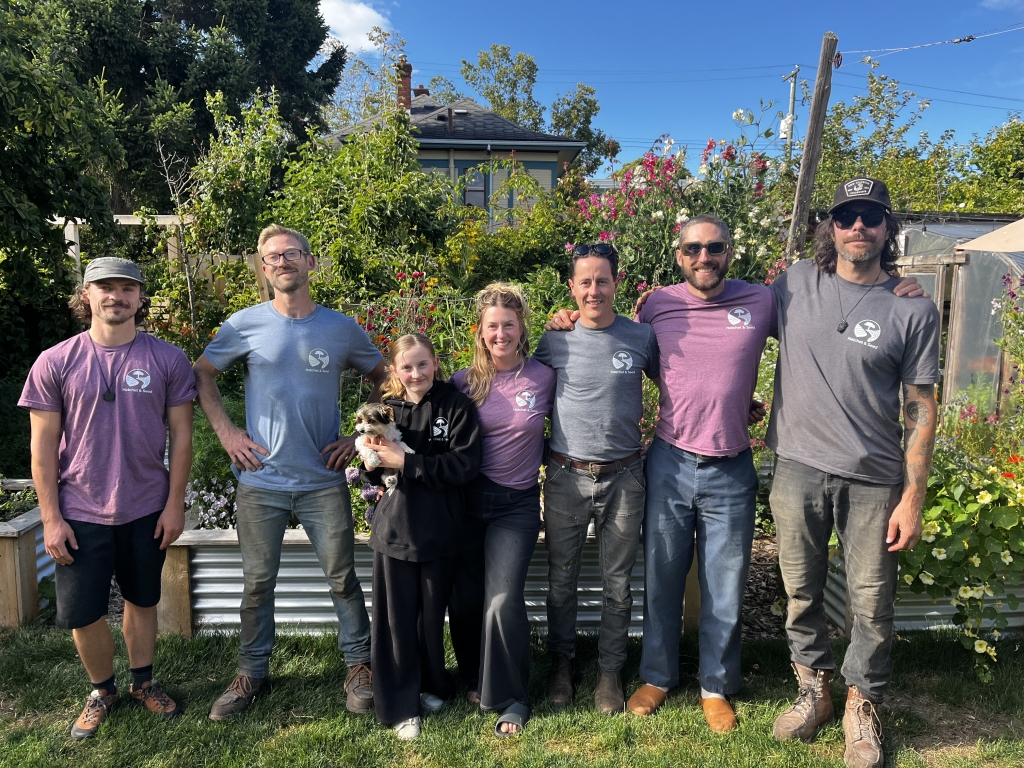
While our landscape team’s core purpose has always been to design and build high-quality custom food gardens, we have also been quietly involved in many local ecological restoration projects over the years.
Many of these projects involved working under the legendary restoration practitioner Dave Polster, who sadly passed away earlier this year. Dave’s legacy is visible all across Southern Vancouver Island and Western Canada. Anyone who had the privilege of sitting in on his lectures or public presentations can attest to the transformative power of his work. (You can read more about his remarkable life and contributions here: In Memoriam: David Franklin Polster).
In the past, we haven’t highlighted this side of our business on our website. However, spurred by the loss of one of our great mentors, we felt it was time to share this vital work.
For 15 years, Hatchet & Seed has served as the “boots-on-the-ground,” “hands-in-the-soil” component of various specialty restoration and earthworks projects. Working throughout Greater Victoria and the CRD, we partner with property managers, restoration organizations, and Registered Professional Biologists (RPBio) to stabilize, restore, and enhance local ecosystems.
Over the years, we have been proud to collaborate with partners such as Polster Environmental, Current Environmental, Swell Consulting, Peninsula Streams Society, and Project Watershed.
Our Specialty Restoration Services Include:
Slope Revegetation & Erosion Control: Wattle fencing, live staking, wood chip mulching, and erosion control logs.
Native Plant Restoration: Rebuilding habitats through the mass planting of site-appropriate native species.
Site Infrastructure: Temporary deer fencing and spray irrigation setups.
Ecologically Sensitive Earthworks & Water Management: Constructing residential rain gardens, water management swales, ponds, and wetlands.
Here is a sample of some of that work:
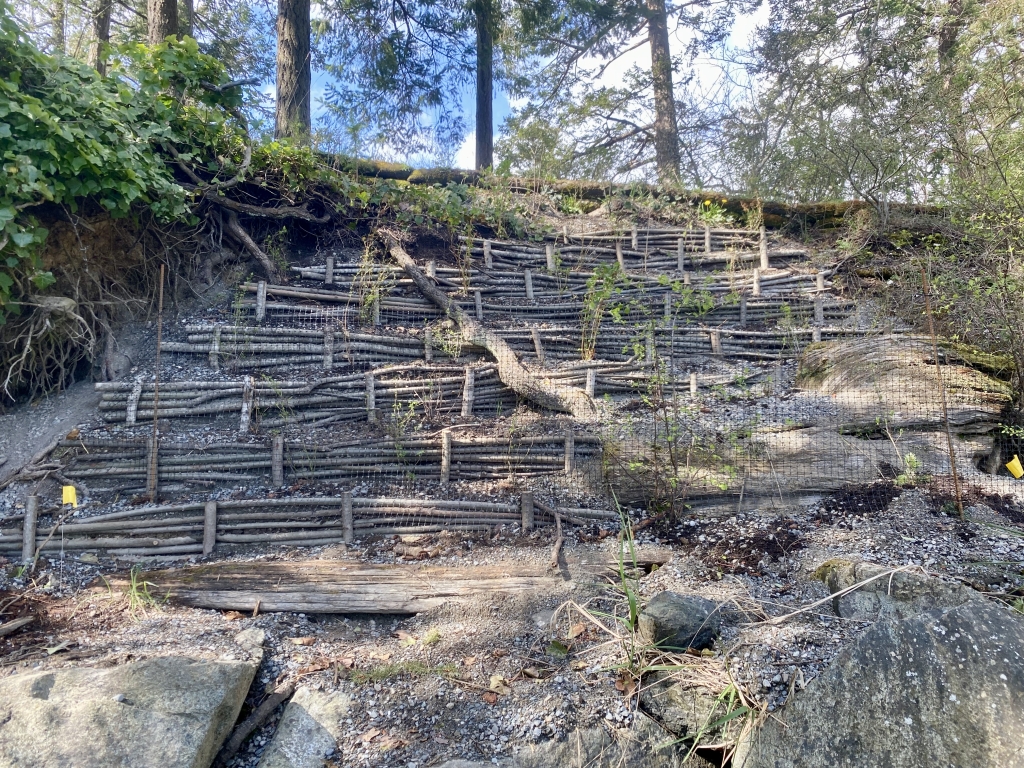
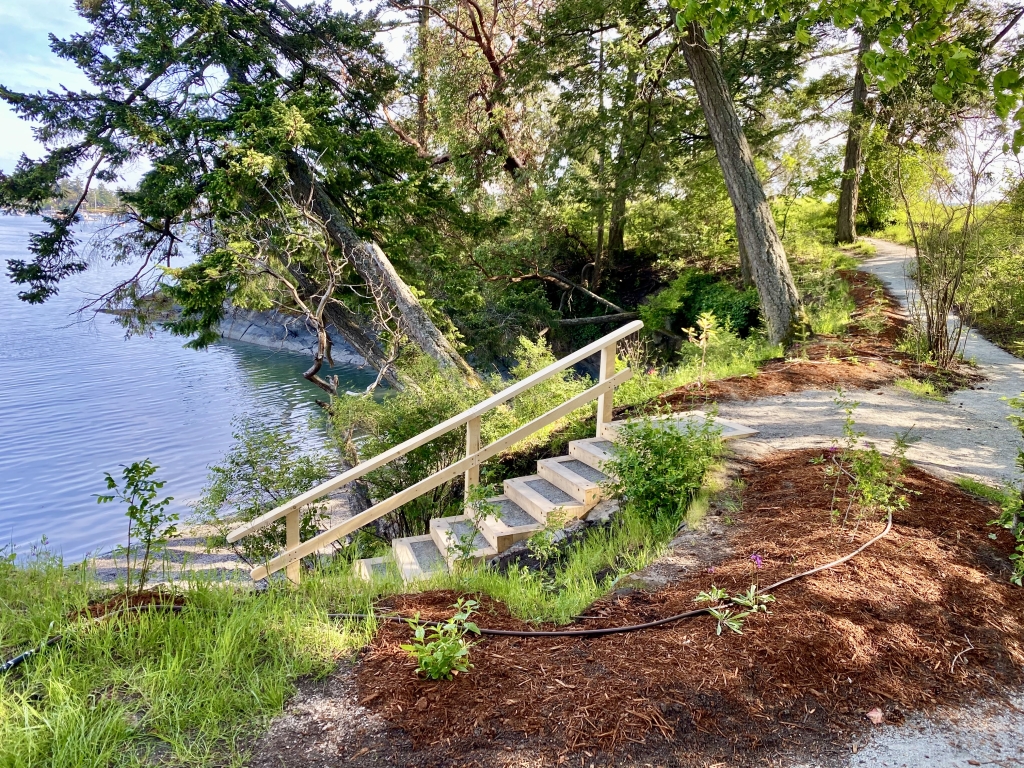
This is a project we worked on in 2026 at Nymph Point Park in North Saanich, led by Peninsula Streams. In partnership with Current Environmental, our role was to work with cultural & archaeological monitors to install wattle fencing, erosion control logs and mass planting of native plants. We also installed the timber staircase to maintain public access to the beach. Learn more here: https://peninsulastreams.ca/our-work/restoration-projects/nymph-point-park/
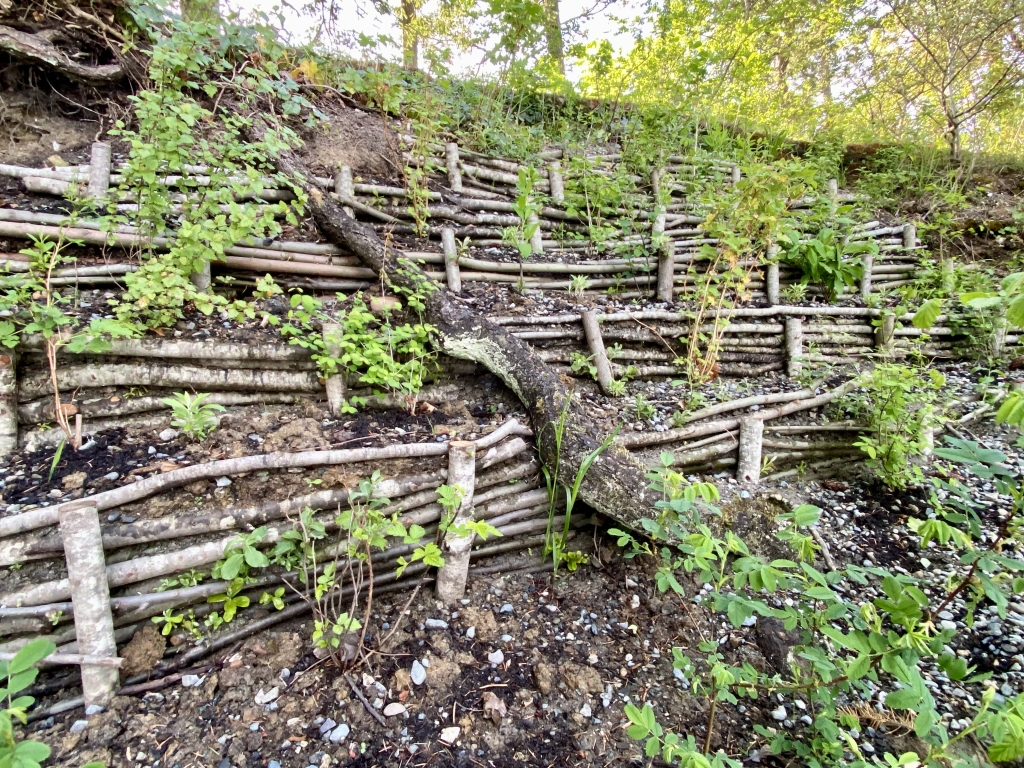
This photo is only 30 days after installation. The willow cuttings that were installed to create terraces (wattle fences) have started to bud out, and the other native plants are rooting as well to stabilize the slope.
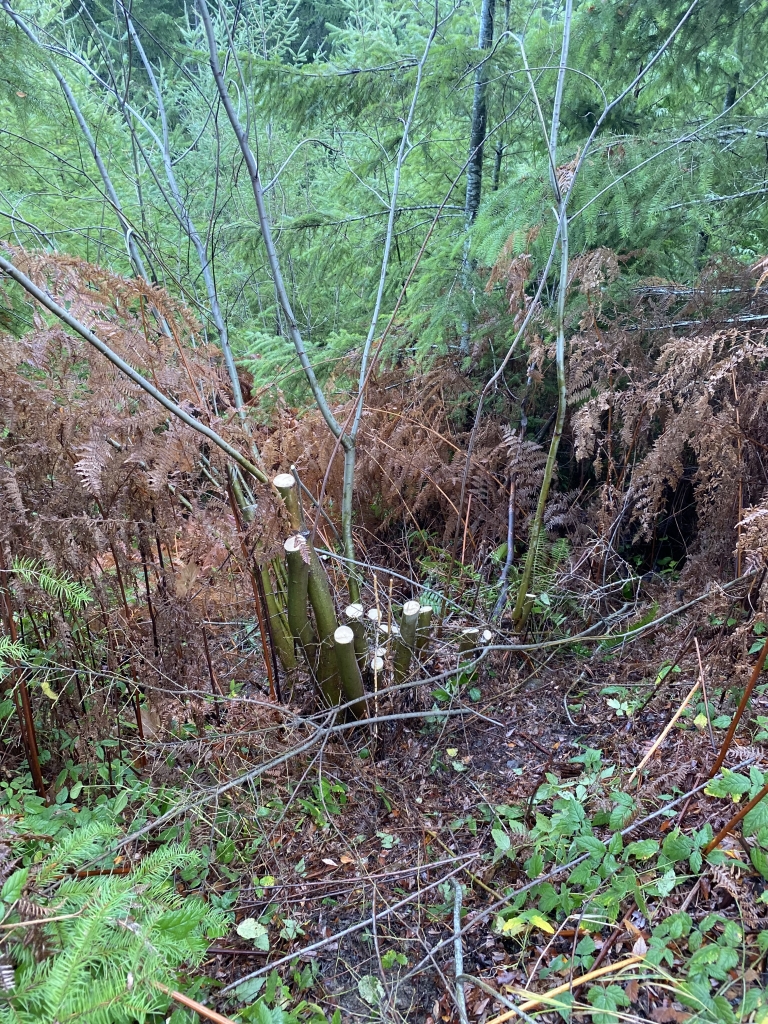
Working with willows is an incredible opportunity. They coppice readily, and their lifespans can be increased with regular cutting. We’ve visited the same ‘stools’ 5-10 years after previous harvests and have been able to sustainably harvest another round of cuttings. We are very careful in our species selection. Not all willow can grow on a dry, exposed slope. We work primarily with upland willow species for coastal erosion projects.
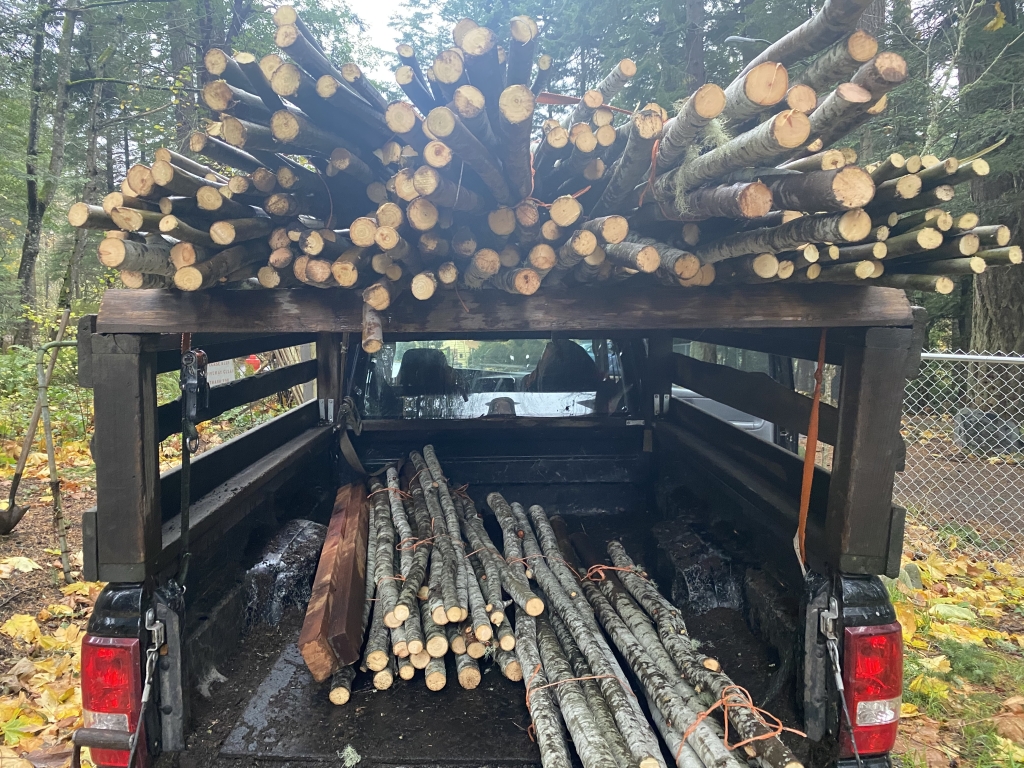
Unloading bundles of willow cuttings; a harvesting activity that must be done in winter.
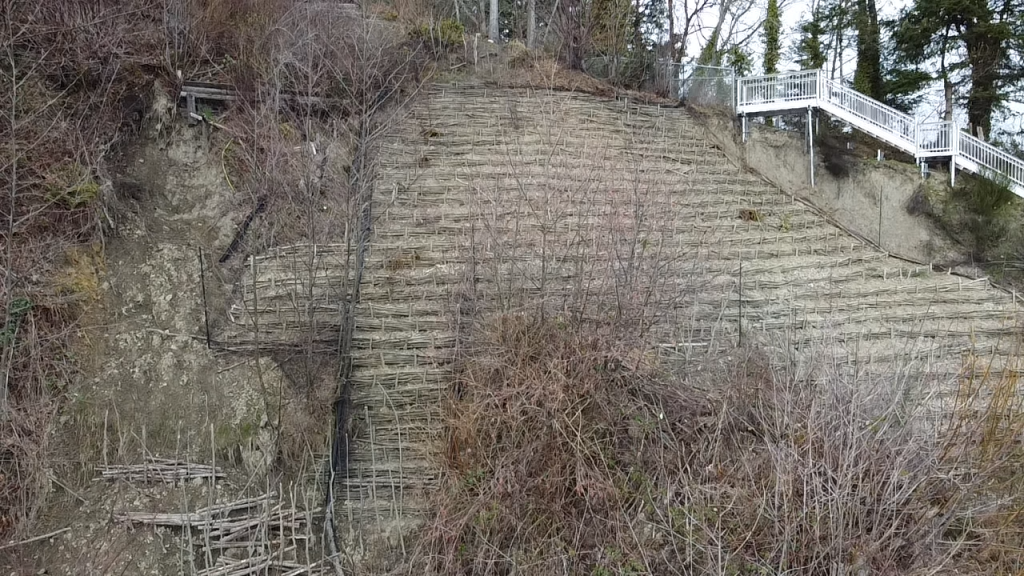
A much larger coastal slope treatment using ‘willow wattle fencing’. With large chunks of the slope falling away during rainstorms, it was simply too steep to direct plant. These living terraces use willow to weave a root system onto the slope and allow longer-term species to establish. This project was completed in partnership with Jeremiah Bain (Bioengineering Lead at Current Environmental).
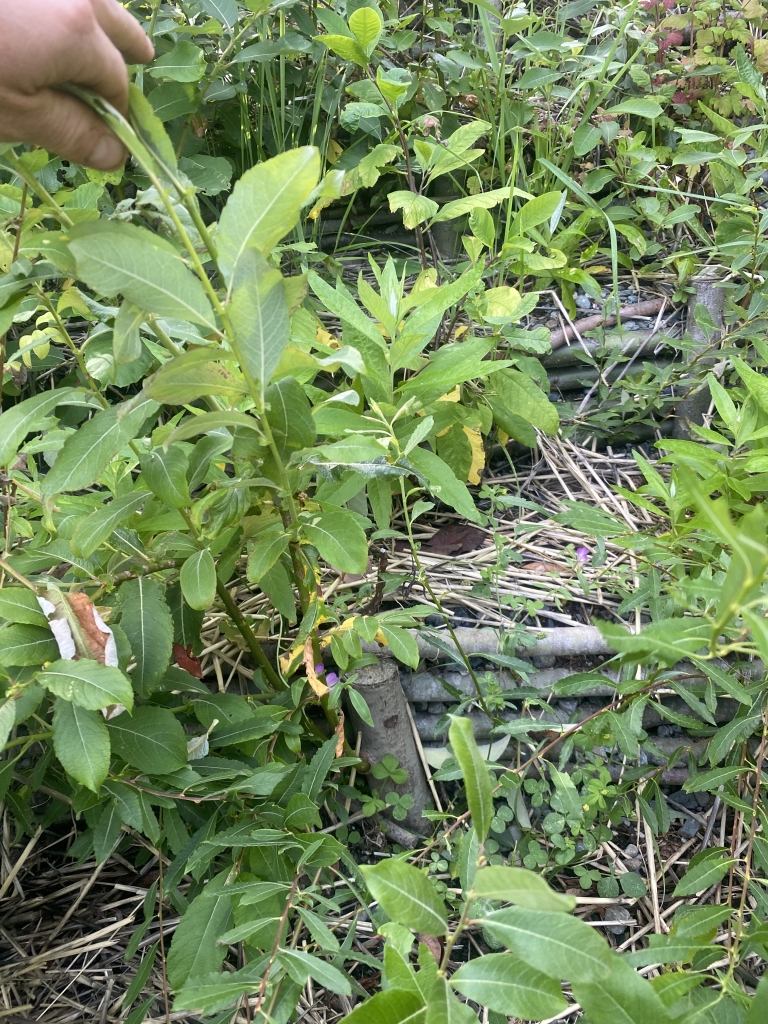
Willow cuttings – both the ‘posts’ and the horizontal ‘fences’ – will lay roots and shoot new growth only 4-6 weeks after planting.
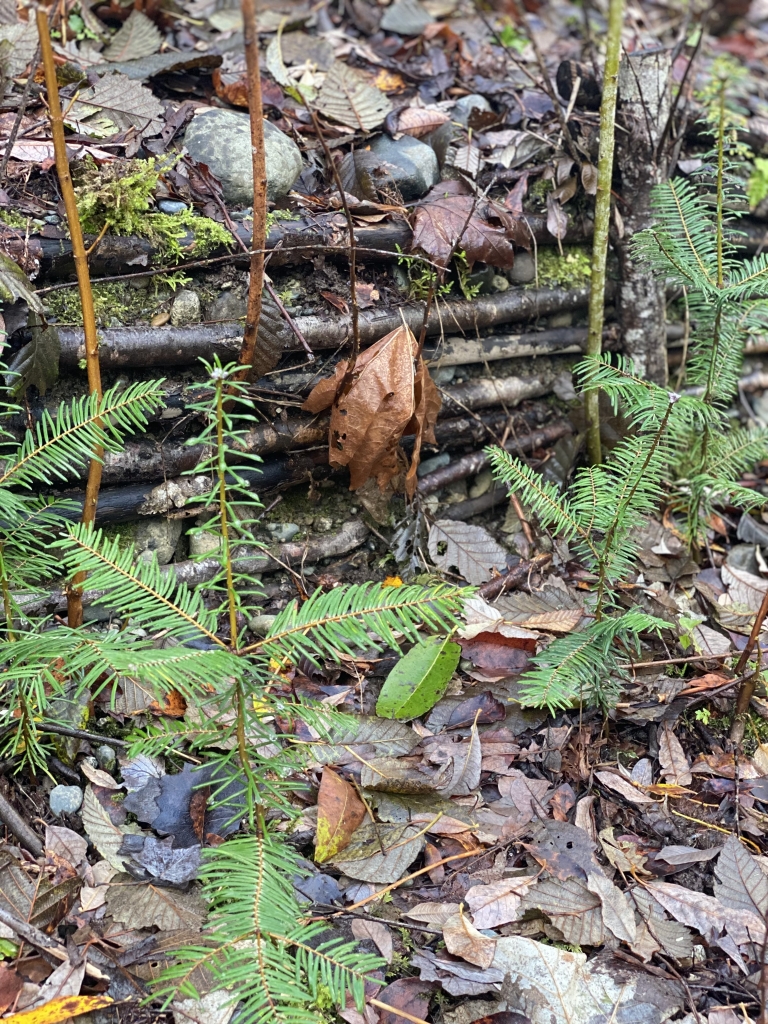
Over the years, only some of the willows will persist, while native conifers like these fir seedlings (which we did not even plant) start to establish. Because the steep slopes have been terraced, new seedlings now have a window to establish themselves before they wash away. You can also see the layer of leaf mulch that begins to feed the soil every year from the willows.
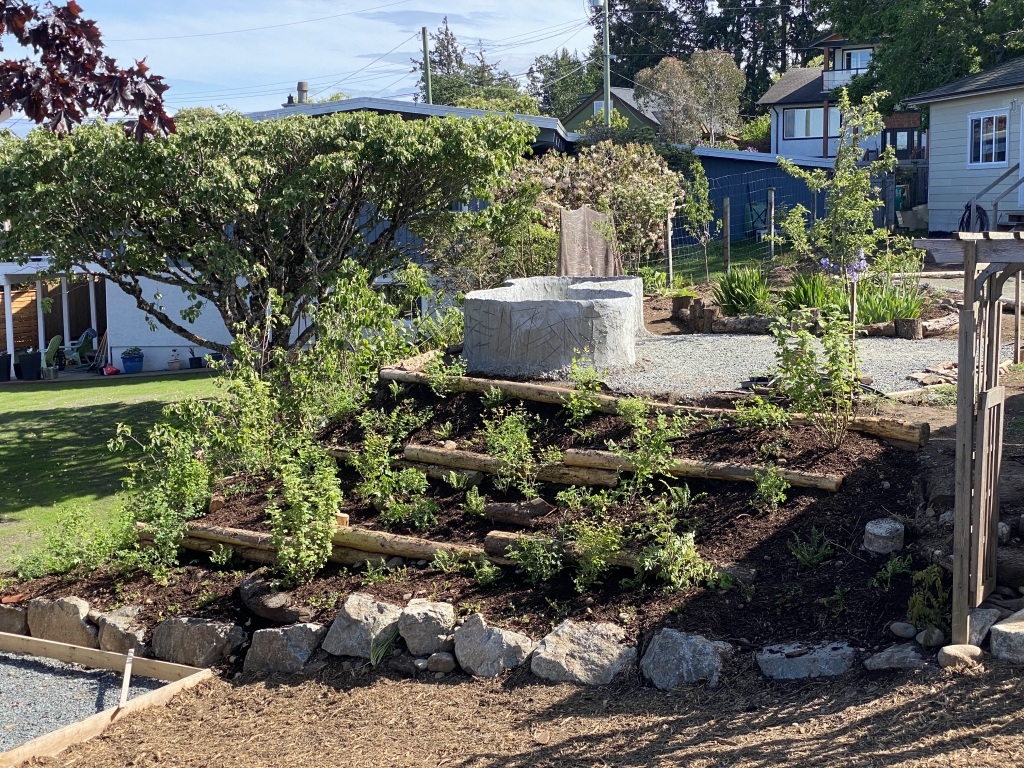
This residential slope – very sandy and prone to erosion – was addressed using a row of rocks at the toe of the slope, cedar check logs and mass plantings of snowberry, nutka rose, red flowering currant and ferns. Today, it is an established thicket, home to many birds and insects.
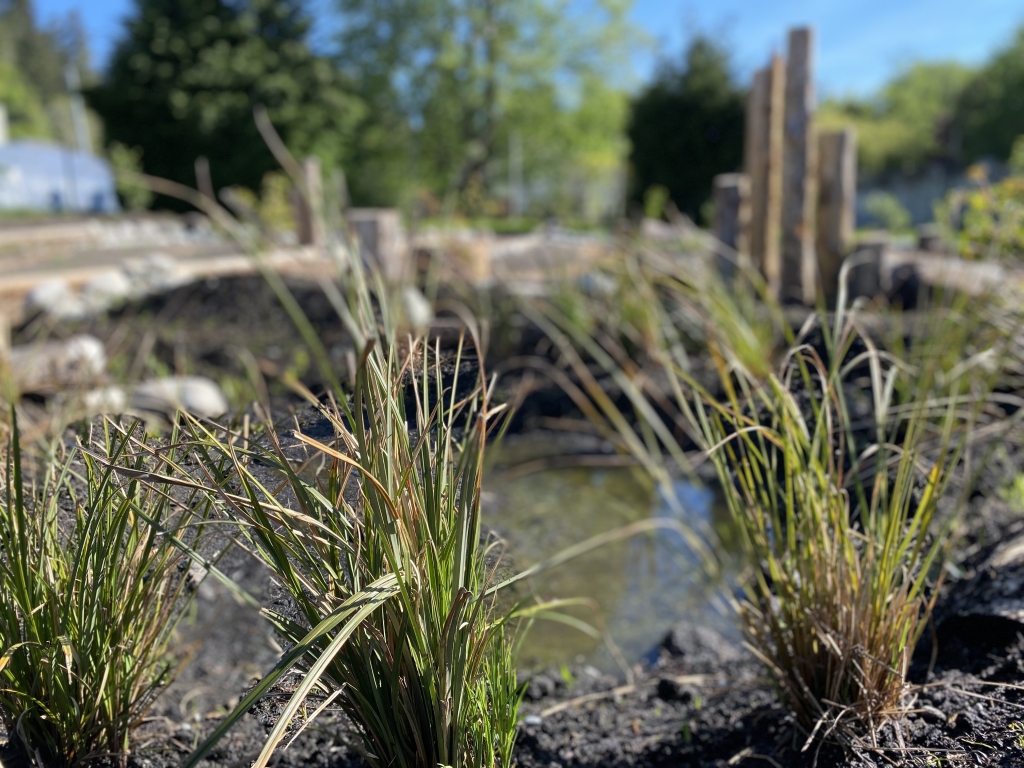
This constructed wetland channelled extensive flooding into a more defined depression, heavily planted with native reeds and sedges to create beauty and function.
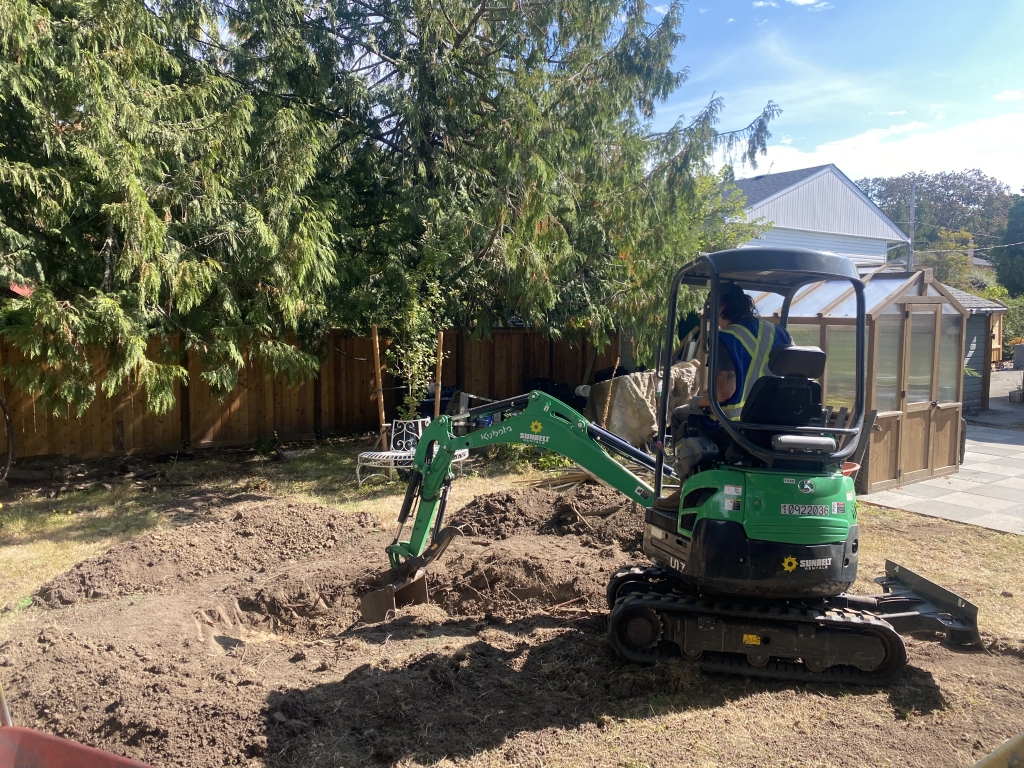
We’ve dug many small rain gardens by hand, but often a mini-excavator allows for easier re-grading of a larger area.
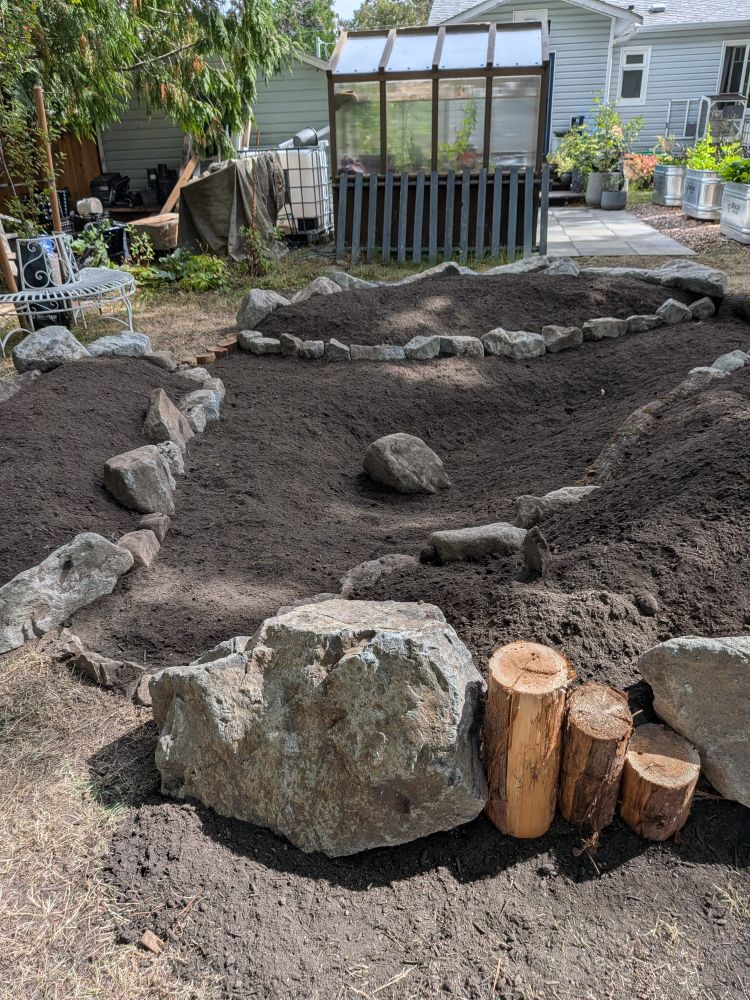
This backyard wetland was dug and reshaped in a day and is now awaiting the fun part – mass planting of native plants and the next big rain storm!
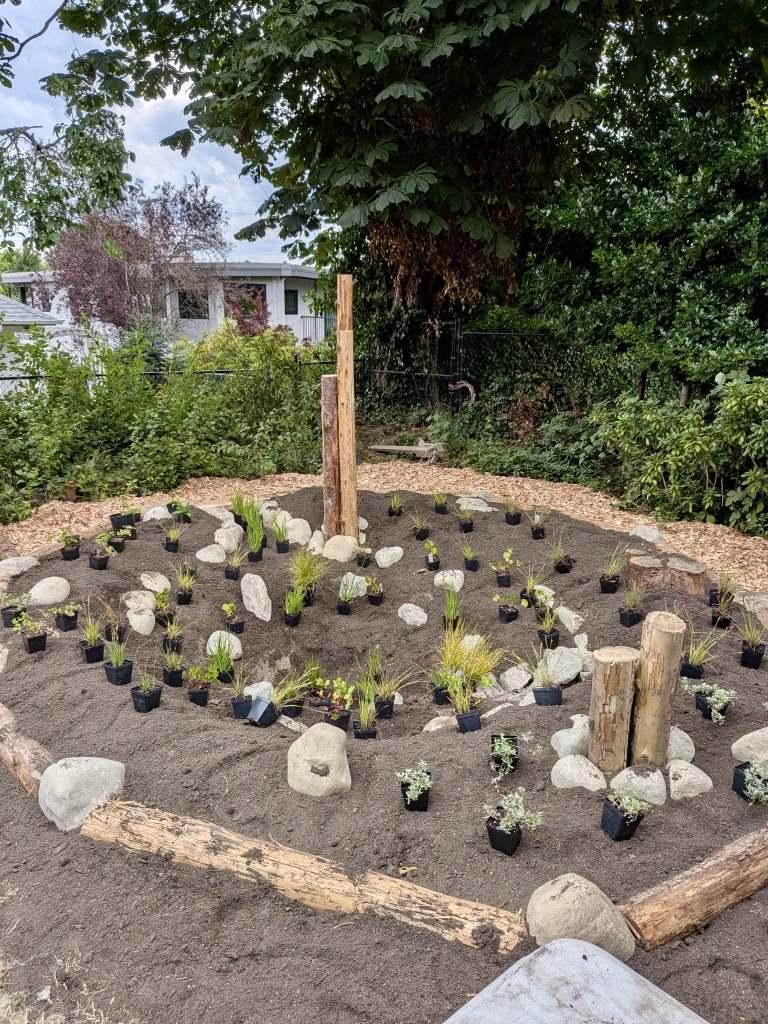
Another constructed wetland. This one was dug and shaped by hand. We like adding tall log elements and rocks to encourage bird perching and other beneficial habitat.
Our team built this timber staircase to provide beach access as an alternative to a large aluminum staircase that was deemed to create too much ground disturbance.
Do you have a specialty ecological restoration project in Greater Victoria?